Showing posts with label 21st Century. Show all posts

01 August 2012

Connecting Globally with Students and Teachers

With Connected Educator Month beginning today, I thought this would be a good time to do some reflection on my global educational experiences this summer. When I graduated high school some 16 years ago, I never expected that some day I would represent my school as a teacher-ambassador in China and take students to five different countries in Europe as I was able to do this summer. When I joined the faculty of Mt. St. Joseph High School seven years ago, I was very excited to be teaching social studies at my alma mater and I knew I wanted global education to become central to my teaching. In the years since I have made many efforts to expand global education at St. Joe through innovative classroom instruction, organizing student trips to Europe and Japan, and becoming involved in the National Consortium for Teaching about Asia (NCTA) program which sent me to China this summer.

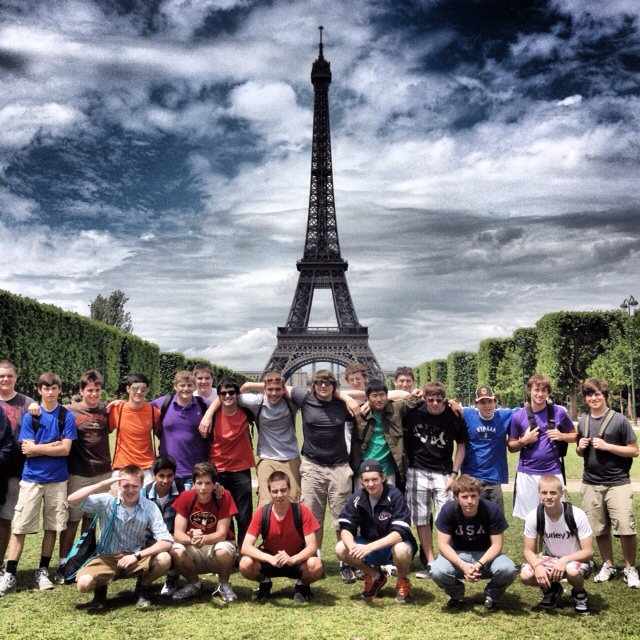
My first overseas adventure this summer involved myself and 48 other (30 of which were students) from my school visiting the Netherlands, Belgium, Luxembourg, France and Germany in a tour that took us to the "Battlefields of Europe" as well as many of its most beautiful towns and cities. It was an amazing two weeks of historical ad cultural exploration that our students will never forget. I began leading student tours in 2008 and I feel it is a critical part of expanding student's exposure to the world around them. Not all teachers and students can do this, but the more who do we will all benefit for this. Also, the connections and contacts made on such tours allow me to bring people from around their world into my regular classroom through writings, discussions and video chats.

I was fortunate enough to be selected with a group of 20 other teachers from across the United States to participate in the NCTA residential study program at Zhejiang University in Hangzhou, China for two weeks in July. During the program we studies Chinese history, language, culture, economic development, and current issues. We also were lucky enough to visit schools, businesses, farms and factories where we could see the Chinese system at work. Through these experiences, which included observing young Chinese students learning English and viewing in awe as over 100 high-rise buildings being constructed at once, I realized that, despite many problems to overcome, China is preparing for the 21st century and we need to be doing the same.

I will be sharing my experience this summer with my students when I return to MSJ in the fall. I hope that we can expand this with more extensive and meaningful experiences such as Chinese language instruction and student exchanges with schools in China. I have already made plans for a student tour to China in the summer of 2014. The future of the world will be greatly influenced by the rise of China and I hope that we can be ready for it. By becoming connected global educators and students I think we can prepare for the new world evolving around us.


03 August 2010

Smartphones Make Smart Learners


Yes, it has been a while since I have posted to my blog.  End of the school year, a trip to Japan with my students, some graduate classes, and a few relaxing weeks later, I am ready to start putting some of my ideas out into the ether again.  I had originally intended this post to be about some of the things I've been working on for the upcoming school year (I will post on that later this week), but todays Edchat on Twitter got me thinking in a new direction.

The discussion focused on the use of smartphones in the classroom.  There were many views on how to best implement such programs, the benefits and drawbacks, and how curriculum would need to be adapted.  Some really great discussions developed during the hour over these issues and more and it was awesome to see educators thinking about, discussing, and debating their craft.  As a result, I also came across some great resources at http://cellularlearning.org/http://www.cellphonesinlearning.com/ and http://chrismayoh.blogspot.com/.

Now, I come to my personal situation.  Last year, I allowed a limited number of students to use their smartphones, iPhones, and iPod Touches (wifi-enabled) to do research work in our class.  For this, we usually go to the lab or use the class set of wifi-enabled netbooks.  But, the lab isn't always available and we only have about a dozen netbooks (getting a few more this year), so we needed more ways of connecting online.  This was generally pretty successful.  Getting the right to use their mobile devices in the classroom (something they are not usually allowed to do during school hours) gave students a sense of empowerment and responsibility.  As far as I could tell, no one abused the privilege by texting their friends or visiting inappropriate sites (things they likely do anyway when teachers aren't looking).  The students were treated as adults, and they became better learners as a result.

This year I am planning on challenging my school to rethink mobile device use in the classroom.  This needs to involve a reevaluation of our phone and mobile device policy.  Also, it needs to involve teachers who are willing to pilot the use of such devices in the classroom (I plan on expanding my use of it, but one voice can get drowned out pretty easily).  I will post more on this effort as it develops in the coming weeks.  These devices are here, and they are here to stay.  We should learn to make use of their enormous educational potential instead of treating them like a dangerous and unwelcome item.

02 February 2010

Debriefing Educon

Wow, what a weekend!  EduCon 2.2 in Philadelphia this past weekend was a fascinating experience.  Over the three days of the conference I think I crammed more information into my brain than I have in years and I am still trying to come to grips with everything I have learned.  Overall, the conference went very well, and hats off to Chris Lehmann and the Science Leadership Academy for a great conference.  The teachers and students all did a great job.  To all of the presenters, I was very impressed and pleased with our conversations and wished I could have attended more (I am looking forward in the coming weeks at looking at the recordings and information from the different sessions to get as much as I can from most of them.)  I met a lot of great new people with whom I hope to continue the conversation going on through my PLN (Twitter, through this blog, the various Nings of which I am a member).  I will be talking about more about the details relating to what I learned and who and learned it from at EduCon in the coming weeks.
But, as with any good metal exercise, I am left with more questions from the conference than anything else.  What to do with all of this new insight?  How to make the best of this information?  What does this mean for my teaching and the possibilities of teaching at my school?

In some ways, what I believe is the biggest question left me a little worried.  How are we going to bring the change to schools that we need?  Yes, there is a large and growing group of progressive educators in America (the conference was a shining example of that) but, they are still a small percentage of the overall system which is not changing the way we would hope.  There is hope, but a lot to be concerned for, and that should call us all to action.

29 January 2010

EduCon 2.2 - So Much to Learn in So Little Time

This weekend I have the fortunate opportunity to attend the EduCon 2.2 Conference this weekend in Philadelphia, PA.  I will be traveling there with a colleague of mine and my school was nice enough to pay for most of the costs of the conference.  I see this as a sign that my school is willing to make the changes needed to move our school into the 21st century.  Also, I hope the conference, the networking and conversations held there will give me new ideas and insight into the changes we need to be making.

First, EduCon is not a "technology conference," (although technology is a big part of it) but rather it is a place for innovation in education.  As the axioms state:
  1. Our schools must be inquiry-driven, thoughtful and empowering for all members
  2. Our schools must be about co-creating — together with our students — the 21st Century Citizen
  3. Technology must serve pedagogy, not the other way around
  4. Technology must enable students to research, create, communicate and collaborate
  5. Learning can — and must — be networked
These principles give a clear way forward on talking about education in the 21st century and how we bring about change and reform.

For those of you who cannot attend, you can follow and participate in the conference through Twitter by following the hashtag #educon or through Elluminate which will be providing live streams of all 76 sessions or "conversations."

My biggest problem is deciding which conversations to attend.  So many look really good.  The great thing about them being streamed through Elluminate is that they can be accessed later.  At this point, here are my top sessions I hope attend or view later (but these could change once we arrive!).  If you follow the links you can get more information about the sessions and how to follow on Elluminate.
  • Tinkering Towards Technology Fluency - Tinkering is a time honored way to learn, invent, and innovate. Yet in schools, tinkering is viewed as wasted time, while instead we teach students to make, do, and invent using rigid procedures with tight timelines. How can we bring the creative benefits of tinkering back to the classroom?  
  • Teaching Big Ideas to 21st Century Learners through collaboration, innovation, and differentiation - Presented by a Program Consultant and Classroom Teacher from Ontario - Come see the power of a collaborative and engaging online learning environment that meets the needs of 21st Century learners in elementary and middle schools.  
  • Thinking Creatively: Inventing the Possible - If schools kill creativity, then what hope do we have of helping our students be prepared to devise creative and imaginative solutions to problems in their futures? Come examine frameworks for thinking and working creatively. Explore and experience creativity, innovation, and imagination in action. Reframe your problems into opportunities
  • 21st Century Classrooms or 21st Century Learning? - We've all been encouraged to build a 21st century classroom full of cool technology tools and gadgets, yet many have witnessed the underwhelming change these tools have brought to student learning. Why is that? We'll explore this dilemma as we work collaboratively to clarify a vision and a process for creating digital age learning environments.
  • Educational Commissioning and Project Based Learning - What if school wasn't just like real life, what if it just was real life? - Why we attend school, what we accomplish while we are here, how we spend our time; these are the issues I would like to investigate as we consider how to make 'school' more about meaningful and enriching life experiences, and less like hoop jumping and necessary evil.
  • Best Practices: Project-Based Learning in Forward-Thinking Schools - Explore project based learning using real examples of projects from two different non-traditional urban high schools. We'll discuss the characteristics of a good project and share strategies for designing projects to maximize student learning and engagement. 
  • The Democratization of the Classroom in the 21st Century - The intention of this workshop is to explore how the ideal of more democratic and progressive classrooms might look today in light of 1:1 computing, networked communication and other tools that might be available. 
  • Rethinking Portfolios - Portfolios can be used to document the process of learning, and to document what has been learned. In this conversation, we will look at how these two facets of learning can be mutually supportive. Moreover, we will look at portfolios as tools for student learning and teacher professional development.
Again, EduCon promises to be a really great experience.  You can follow me via my Twitter feed and I will blog about my experiences as soon as possible.

08 January 2010

Where I've Been and Where We're Going.

Over the past several years I have made a conscious effort to bring more and more innovating teaching and learning to my students on a regular basis. Much of that has centered around the introduction and usage of digital and web 2.0 technologies into my classroom practices. In some ways this has been quite successful, but not in all cases.

When I first began teaching a decade ago, the availability of technology in the classroom was still relatively limited. At the same time, the technologies for students online were limited to mostly to research through static websites, databases and online encyclopedias. The opportunities to interact and create with technology were just beginning to emerge.

Like any forward-thinking teacher during that time, I had my ups and downs with my teaching style and the integration of technology into that. I (like many) gravitated to the digital projector as a new way to present multimedia presentations to my students. While this was a far better system than the chalkboard or overhead projector, very little was really changing in the learning in the classroom. The instruction was still centered on me, the "teacher-expert," with students taking notes and participating in a limited ways in discussion. I occasionally had the students conduct an project using online sources, but again they were limited to websites, databases and online encyclopedias. I also created my own website with my presentations online.

Then, about four years ago I began to investigate and use web 2.0 technologies in the classroom. Many of these were just emerging (especially for classroom use) and through the help of a colleague I began integrating them more and more into my instruction. I began by using a wiki as a place for students to work collaboratively on research and make group study guides. I expanded to class blogs were students could investigate and answer questions. My students and I then expanded to podcasts, online videos and online presentations of ways of doing collaborative projects. I believe my students benefited greatly from what they learned using these new tools, but in the end they were often just "add-ons." The main focus of the class continued to be my PowerPoint created lectures and tests based on those.

This past year I have started to question my system. What are the kids really learning? What are they retaining long-term? What is important for them to know and what is just "facts and figures?" Are they getting the essential skills they need to succeed in a very different world and a world that is changing rapidly?

I have come to the conclusion that the focus needs to change. It shouldn't been memorization and reguritation that most of what I have done over the past decade promotes. Instead, the students should be learning to be 1) independent and self-regulating learners, 2) people who can work effectively with others, 3) citizens who see the world, knowledge and ideas as interconnected (not broken into distinct subjects), 4) and individuals who can think for themselves. Now, I don't claim to have all the answers on how to do this, but not to try to understand how this happens and to make it happen would be a grave injustice to my students, my profession and the world at large.

So, I have begun the process of change. I have begun moving my teaching to a format that focuses on creating 21st century learners. This will not be an easy process and it won't happen overnight. There is much to learn, do and experiment. I cannot do this alone. Change requires teamwork in addition to vision and action. Stay tuned, more to come soon.

03 January 2010

The Age of Connectivity

As a student of history, I am always fascinated by the developments over the course of human events that have led us to our world today. Historians often use 'periodization' to delineate and explain these developments in different ways. So, we end up with the Renaissance, or the Age of Revolutions, or the Age of Progress, etc. Each period in history is unique and has its own spirit.

What will our age be known as?

Various names have been given to our time over the past few decades; the Nuclear Age, the Jet Age, the Space Age, the Information Age, etc. But, I think it has become pretty clear that the 20th century will be know as a time of global and ideological conflict. Beginning with the First World War through the end of the Cold War, most every event was marked either by conflict or ideological division in the world. But, from the period of the 1980s through to around the year 2000, this all started to change. As the Cold War ended, ideology was less of a driving force and for the first time in human history the barriers between most humans were being eliminated (politically, economically, and technologically). Many will point to the problems of the last decade (terrorism, war, economic collapse, climate change) as the defining narrative of our time. But, I think in the long view of history, these events will be far more minor than they seem to us today living through them. I believe that our time will be known as the Age of Connectivity (or what Isaac Mao calls 'sharism, a term I love, but I won't steal... yet. See his amazing article here.)

As the Gutenberg printing press spread the Renaissance, Reformation, and Scientific Revolutions of the 16th and 17th centuries, the development of digital technologies will shape the next several centuries to come. What those technologies do that none have ever been able to do before is to connect people and their ideas no matter the space or time.

This may seem to be a certain path to the future, but not necessarily so. The shape of the future is not certain. The existence of the technology itself does not guarantee its best usage. After Gutenberg, it took visionaries like Martin Luther who said that people should be able to read the Bible in their own printed language to took the first steps toward more independent thought. It would take later centuries and more visionaries to push the bounds of the printed word and education to the masses.

So, who will be our 'digital visionaries?' Who will see the potential of the new connective technologies to create citizens who think, create, and collaborate? Will it be teachers? Will it be you?


01 January 2010

New Thinking in Education for a New Decade

Hello 2010 and the second decade of the 21st century. Also, welcome to my blog. I hope that what you read here will be enlightening, entertaining and thought-provoking.

First, a little about myself. I am a high school Social Studies teacher at a fairly traditional Catholic boys school in Baltimore, Maryland, United States. I have become known, jokingly, to some of my students as "Folmerica," a moniker I now take on with pride. I have been teaching for the past decade (I began teaching in 2000) and I have evolved as a teacher in many ways over that time. My goal, like any good teacher, is to expand my students experiences and to get them to think for themselves. Over the past few years I have experimented more and more in ways of doing that, in particular using various "web 2.0" technologies like podcasts, blogs and wikis. I think this has given them a good experience, but all the while, something was still missing; my overall educational philosophy was starkly traditional and "20th century." That is not good enough for the times we now live in.

Hence, the main purpose of this blog. Here, I will attempt to chronicle the revolution I want to create in my teaching and teaching at my school. My purpose is to bring 21st century education to the forefront of my practices and my school at large. What does that mean? I am not completely sure. But I envision an educational environment where students are directing their own learning, connecting and collaborating with others, learning across disciplines and curricula, creating and inventing their own understanding and meaning, critically thinking, and hence becoming what I call "digital global citizens." Along with documenting this journey, I will also include information about educational technology, current world events, and best practices as they relate to this developing vision.

A new decade calls for new thinking in education. The past decade has given us the tools, theory, and practice to make this reality. Now the question is, will we make it happen?